
Where Justice and Consequence Collide
From hidden motives and criminal minds to investigations, corruption, and moral tension, this crime collection is made for readers who love sharp storytelling and high-stakes conflict.
What defines the crime story genre?
The crime story genre centers on unlawful acts, the people affected by them, and the systems or individuals trying to understand, stop, or survive them. These stories often involve murder, theft, corruption, fraud, organized crime, police work, or legal conflict. At their core, crime stories are driven by tension, consequence, and the search for truth, justice, or survival.
Crime fiction can take many forms. Some stories focus on detectives solving a case. Others follow criminals planning or covering up a crime. Some are gritty police procedurals, while others lean into psychological suspense, courtroom drama, or noir storytelling. What unites them is a central conflict shaped by crime and its ripple effects.
One of the strengths of crime fiction is moral pressure. Characters are often forced into difficult choices. Even when the line between right and wrong seems clear at first, strong crime stories usually reveal shades of gray. A detective may bend rules. A witness may hide the truth. A criminal may be sympathetic. These tensions give the genre depth.
Readers of crime fiction are usually looking for momentum, tension, and a sense that every clue, action, or mistake matters. A strong crime story keeps the reader asking questions: Who did it? Why did they do it? What will happen next? Who can be trusted? The best examples answer those questions in ways that feel surprising but earned.
How to build atmosphere?
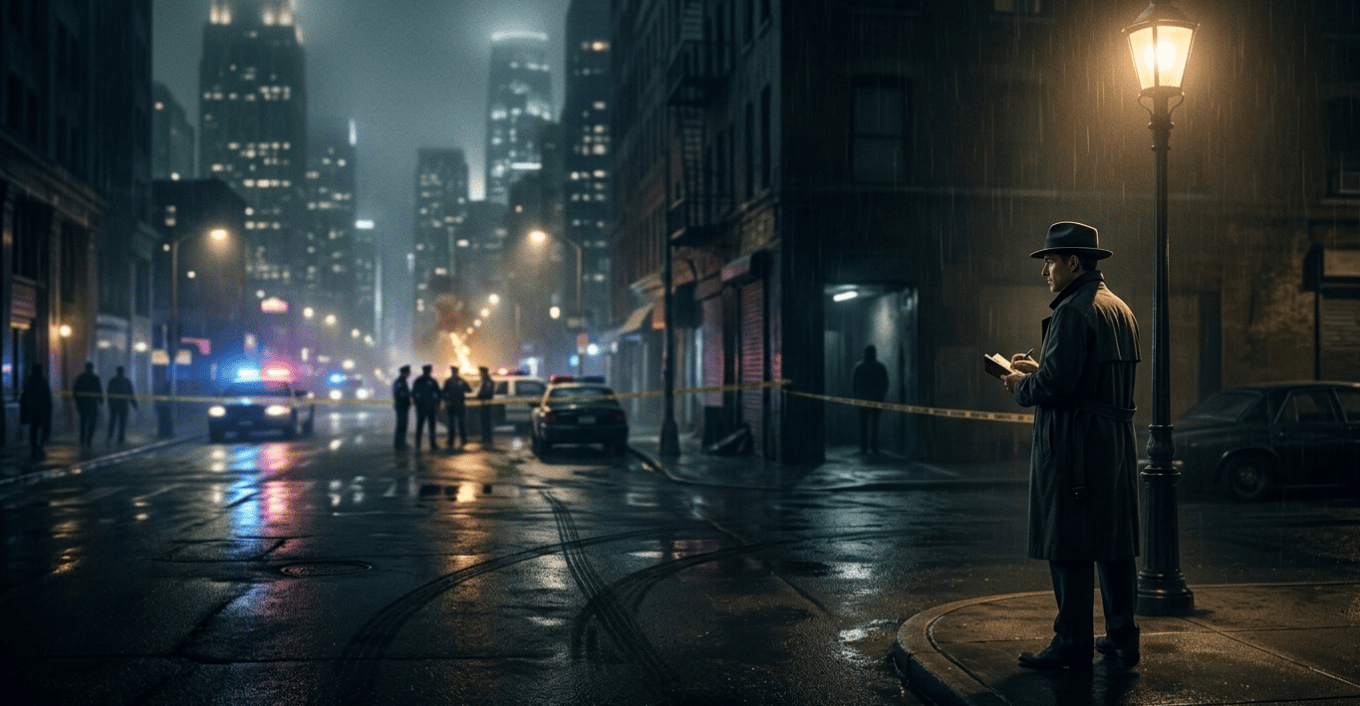
In crime fiction, atmosphere should create tension, urgency, and unease. The setting often reflects danger, secrecy, or pressure. A city street at night, a cluttered interrogation room, a quiet suburban home hiding something terrible, or a rainy parking garage can all become emotionally charged when described with purpose.
One of the best ways to build atmosphere in crime fiction is through controlled detail. Instead of over-describing everything, focus on the details that suggest tension. A flickering streetlight, a door left slightly open, a half-finished cup of coffee at a crime scene, or the echo of footsteps in an empty hallway can create immediate unease.
Atmosphere in crime stories also benefits from pacing. Shorter sentences and carefully timed reveals can increase urgency. If the protagonist is under pressure, the prose should often reflect that pressure. If a scene involves suspicion or danger, the reader should feel that something is wrong even before it is fully explained.
The environment can also mirror the emotional state of the story. A sterile courtroom may feel cold and unforgiving. A crowded bar may feel watchful and threatening. A small town may seem peaceful on the surface while hiding deep tension underneath. The more the setting supports the emotional tone, the stronger the atmosphere becomes.
Sound, movement, and silence are especially useful in crime writing. The click of a lock, the buzz of fluorescent lights, distant sirens, a phone vibrating on a table, or a sudden silence during questioning can all sharpen suspense and realism.
Tips for self-publishing?
Self-publishing a crime novel can work very well when the book feels professional, tightly plotted, and clearly positioned for the right audience. Crime readers often know exactly what they like, so clarity in packaging matters.
Here are five practical tips for new crime authors:
Tip 1: Know Your Crime Subgenre
Crime includes police procedural, detective fiction, legal thriller, noir, caper, psychological crime, and more. Understanding your exact niche helps shape your cover, description, pacing, and marketing.
Tip 2: Make the Stakes Clear Early
Readers should quickly understand the crime, the threat, or the investigation that drives the story. A strong opening with tension and consequence is especially important in this genre.
Tip 3: Prioritize Plot Logic
Crime readers notice weak clues, convenient twists, and unrealistic decisions. Make sure the investigation, motives, and reveals hold together. Tight plotting builds reader trust.
Tip 4: Use a Genre-Appropriate Cover
Crime covers usually need a clean, professional, high-tension look. Typography, color choice, and imagery should signal danger, intrigue, and seriousness without looking cluttered.
Tip 5: Write a Blurb Built on Suspense
Your description should raise questions, introduce conflict, and suggest danger. Focus on the case, the central character, and what is at risk if the truth stays hidden.
Final Thought
A strong crime novel pulls readers into a world where every secret matters and every decision carries a cost. The sharper your tension and structure, the more powerful your book will feel.