Big Stories for Little Dreamers
From magical adventures to lovable characters and important life lessons, this children’s collection is made to entertain, encourage, and delight young readers of all ages.
What defines the children's story genre?
The children’s story genre refers to literature written specifically for young readers, typically ranging from toddlers to early teens. These stories are designed to entertain, educate, and inspire imagination while presenting ideas in a way that is accessible, engaging, and appropriate for a child’s level of understanding. Children’s stories often combine simple language, vivid imagery, memorable characters, and meaningful themes that help young readers learn about the world around them.
How to build atmosphere?
In children’s stories, atmosphere is the emotional feeling of the world the reader steps into. It shapes how a scene feels—cozy, magical, adventurous, mysterious, or silly—and helps young readers become immersed in the story.
Unlike adult fiction, atmosphere in children’s stories is usually clear, vivid, and sensory-rich. This helps children easily imagine the scene and emotionally connect with what is happening.
One of the best ways to build atmosphere is through sensory details. Children respond strongly to things they can picture, hear, smell, or feel. Instead of complex descriptions, focus on simple, concrete details that paint a clear picture in the reader’s mind.
For example, instead of writing “The forest was dark,” you might write: “The forest was cool and quiet. Tall trees stretched toward the sky, and the leaves whispered softly in the wind.” Sensory elements like sparkling stars, rustling leaves, warm sunshine, fresh rain, and soft grass help bring scenes to life.
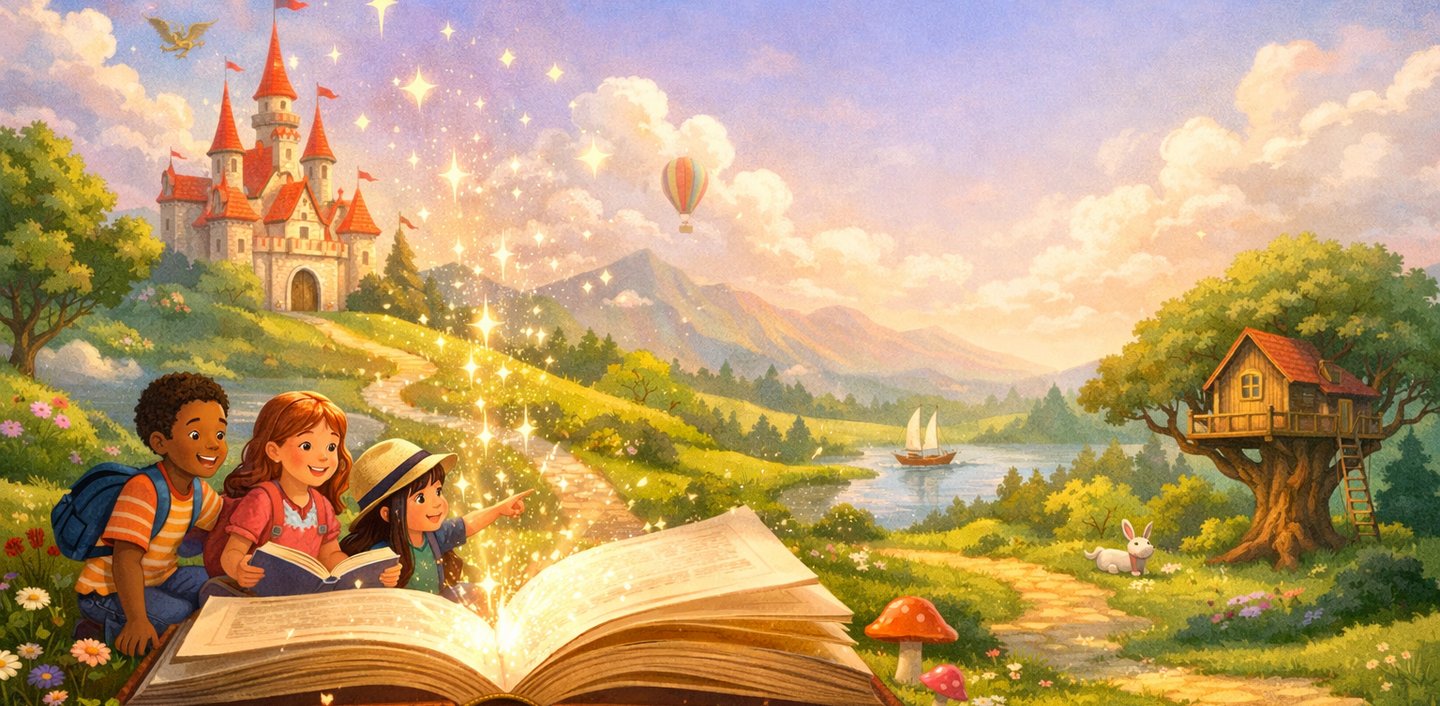
Children’s stories also benefit from a strong sense of wonder. Even ordinary places can feel magical. A simple setting can become exciting when it contains something mysterious or surprising. Hidden doors, glowing objects, secret paths, friendly magical creatures, or unexpected discoveries can instantly make a scene feel alive and intriguing.
Another important element is emotional tone. Atmosphere is not only about what the reader sees but also about how the moment feels. Some stories create a cozy and comforting feeling, while others create excitement, curiosity, or adventure. For example, a treehouse might feel adventurous and secretive, while a warm kitchen filled with the smell of cookies might feel safe and comforting.
The setting itself often plays an important role in children’s stories. Many authors treat the setting almost like a character. A creaky treehouse, a castle glowing in the moonlight, a lively animal village, or a quiet snowy forest can all create a powerful mood for the story. When the setting feels alive, the story becomes more engaging.
Color and light also play a big role in shaping atmosphere. Golden sunlight often creates warmth and happiness, soft moonlight creates mystery, lantern light suggests safety and adventure, and sparkling stars add a magical feeling to the scene. Small details like fireflies glowing in the evening or sunlight shining through tree branches can instantly change the emotional tone.
Movement helps make the world feel real. Small actions in the environment—like leaves swaying, water rippling, clouds drifting, or curtains fluttering in the breeze—give the setting life and energy.
Children’s stories also benefit from language that feels musical and pleasant to read aloud. Gentle repetition and rhythmic sentences help create a memorable atmosphere. For example: “The wind whispered through the trees. Whispered and whistled and whooshed.”
The atmosphere of the story should also change as the story progresses. The beginning of a story often feels welcoming or curious. The middle may feel adventurous or tense as problems appear. By the end of the story, the atmosphere usually becomes warm, safe, or satisfying as the problem is solved.
A simple way to think about building atmosphere is to combine three elements: setting, sensory detail, and emotion. When these work together, the reader can clearly imagine the world and feel what the characters are experiencing.
For example: “The little cabin glowed with warm light, and the smell of cinnamon cookies drifted through the snowy night.”
In children’s stories, the goal is to create an atmosphere that feels vivid, imaginative, and easy to picture. When done well, young readers feel as if they have stepped into a magical place where anything can happen.
Tips for self-publishing?
Self-publishing a children’s story can be exciting, but it also comes with unique challenges. The key for beginners is to focus on creating a clear, engaging story and presenting it professionally so parents, teachers, and young readers will trust your book.
Here are five practical tips that can help new children’s authors get started successfully:
Tip 1: Know Your Exact Age Group
Children’s books are written for very specific age ranges, and the writing style, length, and vocabulary must match the reader’s level.
For example, board books for ages 0–3 often contain fewer than 300 words. Picture books for ages 3–5 usually fall between 300 and 800 words. Early readers for ages 6–8 may contain 1,000–2,500 words. Middle grade books for ages 8–12 can range from 10,000 to 40,000 words.
A common beginner mistake is writing a story that doesn’t clearly fit an age category. Before you begin writing, decide exactly who your story is meant for.
Tip 2: Keep the Story Simple and Focused
Children’s stories work best when they follow one clear problem and one clear solution.
A simple structure many successful children’s books follow is:
1. Introduce the character
2. Present a problem
3. Show attempts to solve the problem
4. Resolve the conflict
5. End with a satisfying or uplifting moment
Avoid complicated plots or too many characters. Younger readers especially need clear storytelling and quick pacing.
Tip 3: Invest in Good Illustrations
Illustrations are extremely important in children’s books. In many cases, the artwork tells half of the story. When self-publishing a children’s book, focus on having illustrations that are consistent in style, colorful and engaging, and easy for children to understand. Professional-looking cover art is also very important. If the illustrations look amateur, many parents will skip the book immediately even if the story itself is good.
With AI image generation advancements recently, if you take the time to really work with one specific photo generation software you may be able to begin your journey generating your own images. However, as you advance in your career and begin to make a decent income, outsourcing your illustrations to a graphic artist may still be your best solution. This will also save you significant time.
Tip 4: Format the Book Like a Picture Book
Most children’s picture books follow a standard 32-page structure. This format works well for printing and helps the story flow naturally with the illustrations.
A common structure looks like this:
Pages 1–2 introduce the story and setting.
Pages 3–24 contain the main part of the story.
Pages 25–30 resolve the conflict.
Pages 31–32 provide a satisfying closing moment.
When writing your book, think about the story in small scenes that will appear on each page rather than long blocks of text.
Tip 5: Write with Read-Aloud in Mind
Many children’s books are read aloud by parents, teachers, or grandparents. Because of this, the writing should sound smooth and natural when spoken. Use rhythm, repetition, and simple sentence structures. Avoid overly long sentences or complex wording. One of the best ways to test your story is to read it out loud. If it flows easily and sounds fun to say, it will likely work well for readers.
Final Thought
For beginner authors, the goal is not to create the most complicated story. The goal is to create a clear, joyful, and memorable reading experience that children will want to hear again and again.
Simple stories told well often become the ones children remember the most.